

Chinese Exam
Help you learn more about the examination(HSK & HSKK)
overall introduction
The Hànyǔ Shuǐpíng Kǎoshì (汉语水平考试), also known as HSK or the Chinese Proficiency Test, is a national standardized test designed and developed to assess the Chinese language proficiency of non-native speakers including foreigners, overseas Chinese and students from Chinese national minorities. Supervised by the Office of Chinese Language Council International (also known as Hanban) under the PRC Ministry of Education, HSK is held regularly in China and other countries each year.

HSK1

HSK (Level 1) tests the candidates’ ability to apply Chinese in daily life, which corresponds to Level 1 of the International Chinese Proficiency Standards (ICPS ) and Level A1 of the Common European Framework of Reference for Languages (CEF). Candidates who have passed HSK (Level 1) can understand and use some very simple Chinese words and sentences to meet specific communication needs, and have the ability to learn Chinese further.
HSK2

HSK (Level 2) tests the candidates’ ability to apply Chinese in daily life, which corresponds to Level 2 of the International Standard of Chinese Proficiency (ISCP) and Level A2 of the Common European Framework of Reference for Languages (CEF). Candidates who have passed HSK (Level 2) can use Chinese to communicate in a simple and direct way on familiar daily topics, and have achieved an excellent level of elementary Chinese.
HSK3

HSK (Level 3) tests the candidates’ ability to apply Chinese language, which corresponds to Level 3 of the International Standard of Chinese Proficiency (ISCP) and Level B1 of the Common European Framework of Reference for Languages (CEF). Candidates who have passed HSK (Level 3) can use Chinese to perform basic communicative tasks in life, study and work, and can cope with most of the communicative tasks encountered when traveling in China.
HSK4

HSK (Level 4) tests candidates’ ability to apply Chinese language, which corresponds to Level 4 of the International Standard of Chinese Proficiency (ISCP ) and Level B2 of the Common European Framework of Reference for Languages (CEF). Candidates who have passed HSK (Level 4) can talk about a wide range of topics in Chinese and communicate with native speakers of Chinese more fluently.
HSK5

HSK (Level 5) tests the candidates’ ability to apply Chinese language, which corresponds to Level 5 of the International Standard of Chinese Proficiency (ISCP) and Level C1 of the Common European Framework of Reference for Languages (CEF). Candidates who have passed HSK (Level 5) can read Chinese newspapers and magazines, enjoy Chinese movies and TV programs, and make more complete speeches in Chinese.
HSK6
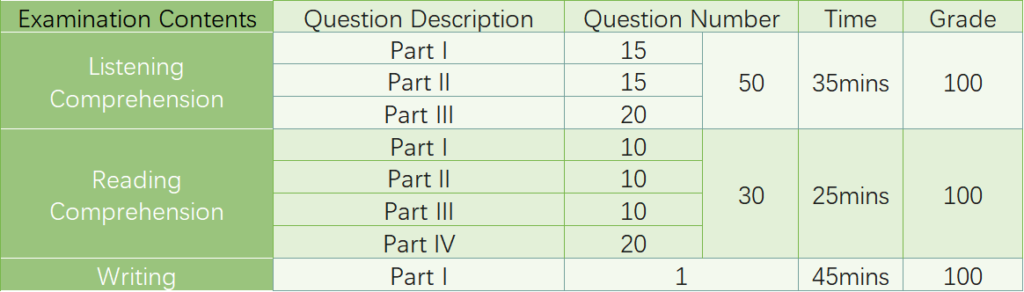
HSK (Level 6) tests candidates’ ability to apply Chinese language, which corresponds to Level 5 of the International Standard of Chinese Proficiency (ISCP) and Level C2 of the Common European Framework of Reference for Languages (CEF). Candidates who have passed HSK (Level 6) can easily understand the information they hear or read in Chinese, and express their opinions fluently in Chinese, either orally or in written form.
overall introduction
The Chinese Proficiency Speaking Test HSKK mainly tests the candidates’ ability to express themselves orally in Chinese, including HSKK (Elementary), HSKK (Intermediate) and HSKK (Advanced), and the test is in the form of audio recording. The three examinations all worth 100 points, with 60 being a pass.

HSKK (Elementary)

Candidates who have passed HSKK (Elementary) need to master about 200 commonly used words, and can understand and verbalize familiar daily topics in Chinese to meet basic communication needs.
HSKK (Intermidate)

Candidates who pass the HSKK (Intermediate) need to master about 900 commonly used words, and can understand and communicate fluently with native Chinese speakers.
HSKK (Advanced)

Candidates who pass the HSKK (Advanced) need to master about 3,000 commonly used words and be able to understand and express their opinions fluently in Chinese.
